
Miami stands as the world’s undisputed capital of Art Deco architecture, boasting the largest and most vibrant collection of these iconic structures. With pastel colors, geometric designs, and a rich history woven into every facade, Miami’s Art Deco buildings are more than just beautiful—they’re a testament to the city’s cultural and creative spirit. In this guide, you’ll discover Miami’s most celebrated Art Deco buildings and landmarks, learn the fascinating stories behind them, and understand why these vibrant structures define the city’s timeless allure.
Understanding Miami’s Art Deco Legacy
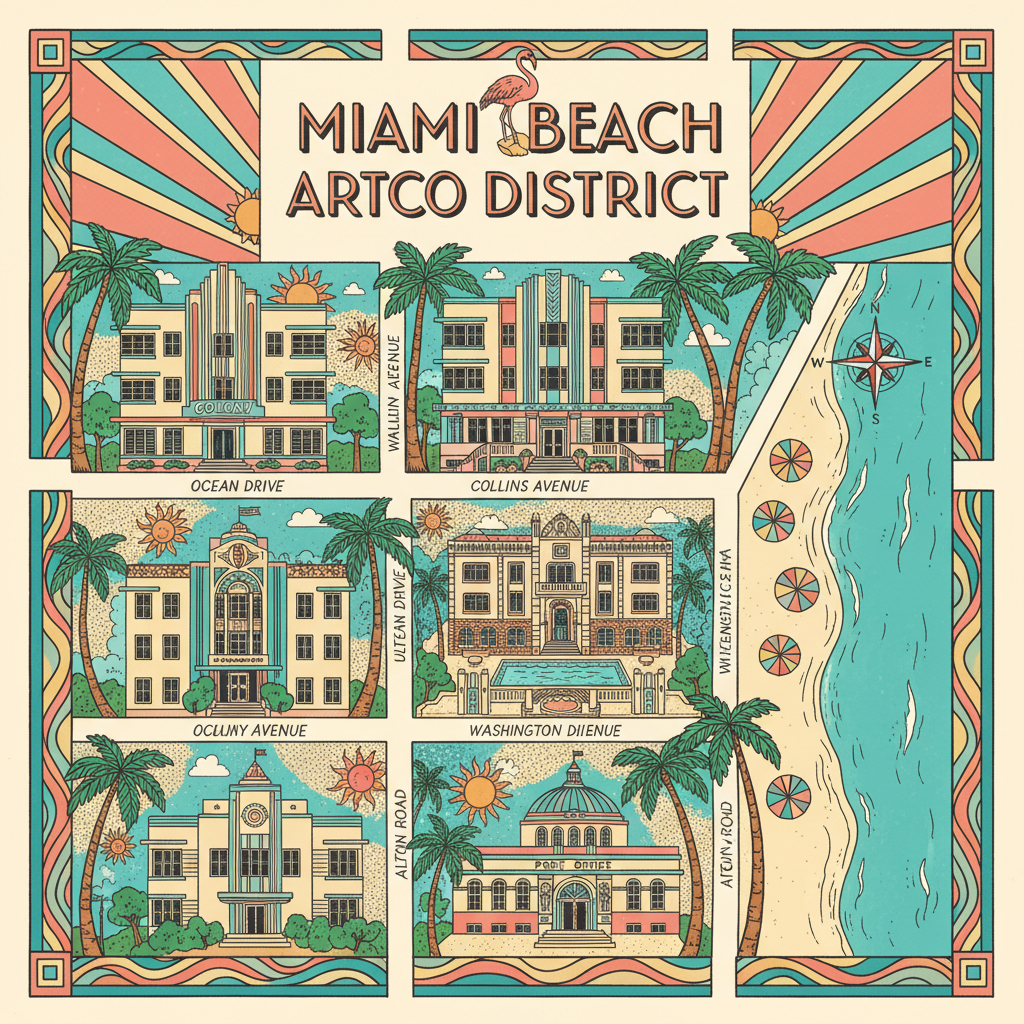
Art Deco is an architectural style that emerged in the 1920s and 1930s, first gaining international recognition at the 1925 Exposition in Paris. While cities like New York and Paris embraced the movement, Miami developed its own unique twist—often called “Tropical Deco”—characterized by pastel colors, nautical motifs, and streamlined forms. The result is a district that feels both modern and timeless, a living museum of design that draws visitors and architecture enthusiasts from around the globe.
Miami’s Art Deco District, centered in South Beach, is home to over 800 historic buildings, making it the largest concentration of Art Deco architecture in the world. In fact, Miami Beach’s Art Deco Historic District is the only 20th-century neighborhood to be listed on the National Register of Historic Places as a district. The area covers approximately one square mile, bounded by the Atlantic Ocean, 5th Street, Collins Canal, and Alton Road.
The Art Deco movement in Miami was shaped by a need to rebuild after the devastating 1926 hurricane. Between 1923 and 1943, over 800 Art Deco structures were constructed, a rate unmatched by any other city in the United States during that era. Today, these buildings are not only preserved but actively used as hotels, restaurants, museums, and residences, making Miami’s Art Deco heritage a living, breathing part of city life.
What Makes a Landmark “Iconic” in Miami’s Art Deco Scene?
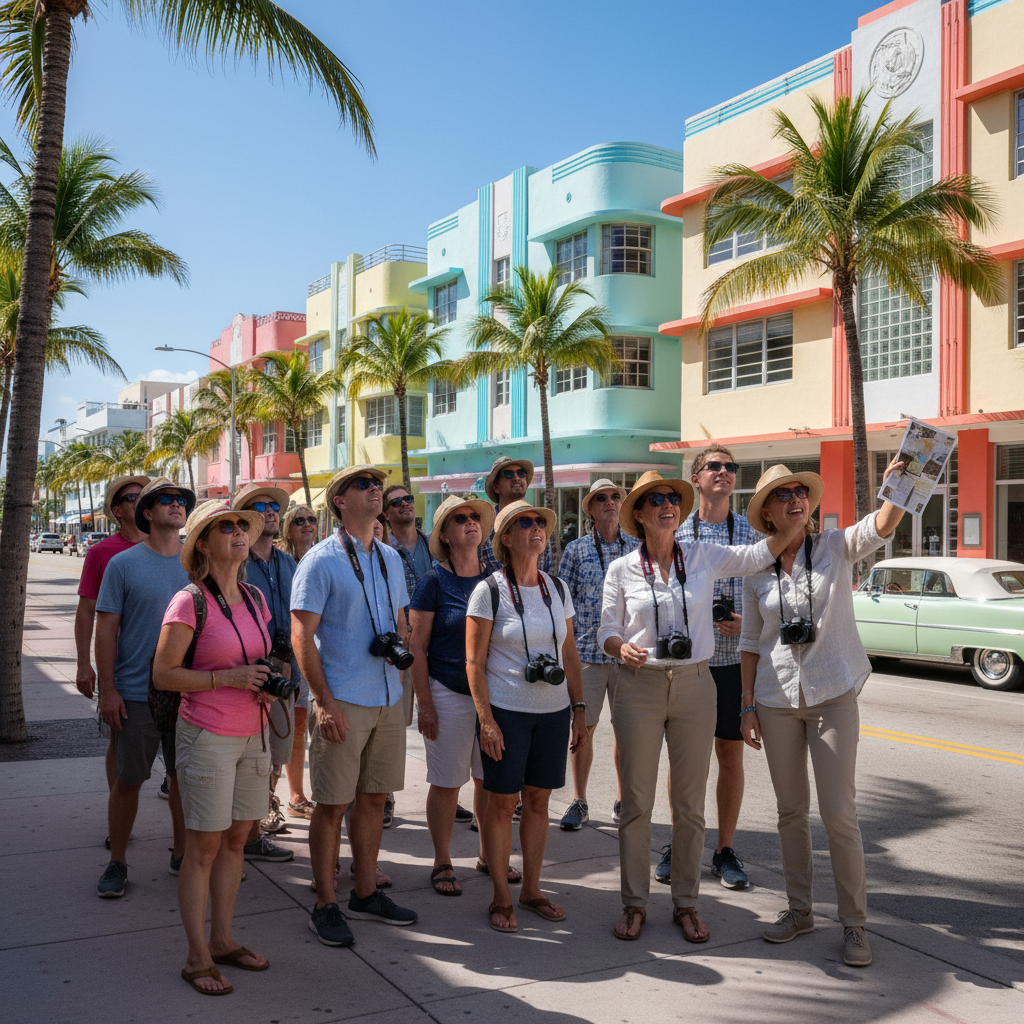
Not every Art Deco building becomes a landmark. What sets these icons apart is a blend of historical significance, architectural innovation, and cultural impact. Many of Miami’s most famous Art Deco buildings were designed by renowned architects such as Henry Hohauser, L. Murray Dixon, and Albert Anis, who left a lasting imprint on the city’s skyline.
Iconic status is also shaped by preservation efforts and community pride. Organizations like the Miami Design Preservation League (founded in 1976) have fought to protect these treasures from demolition, ensuring their stories continue to inspire new generations. Today, these buildings are celebrated not only for their beauty but also for their enduring role in Miami’s identity.
Guide to Miami’s Most Famous Art Deco Buildings
Below are some of the most celebrated Art Deco landmarks in Miami. Each entry highlights the building’s address, year of construction, notable architects, unique features, historical moments, and what makes it truly iconic.
The Colony Hotel
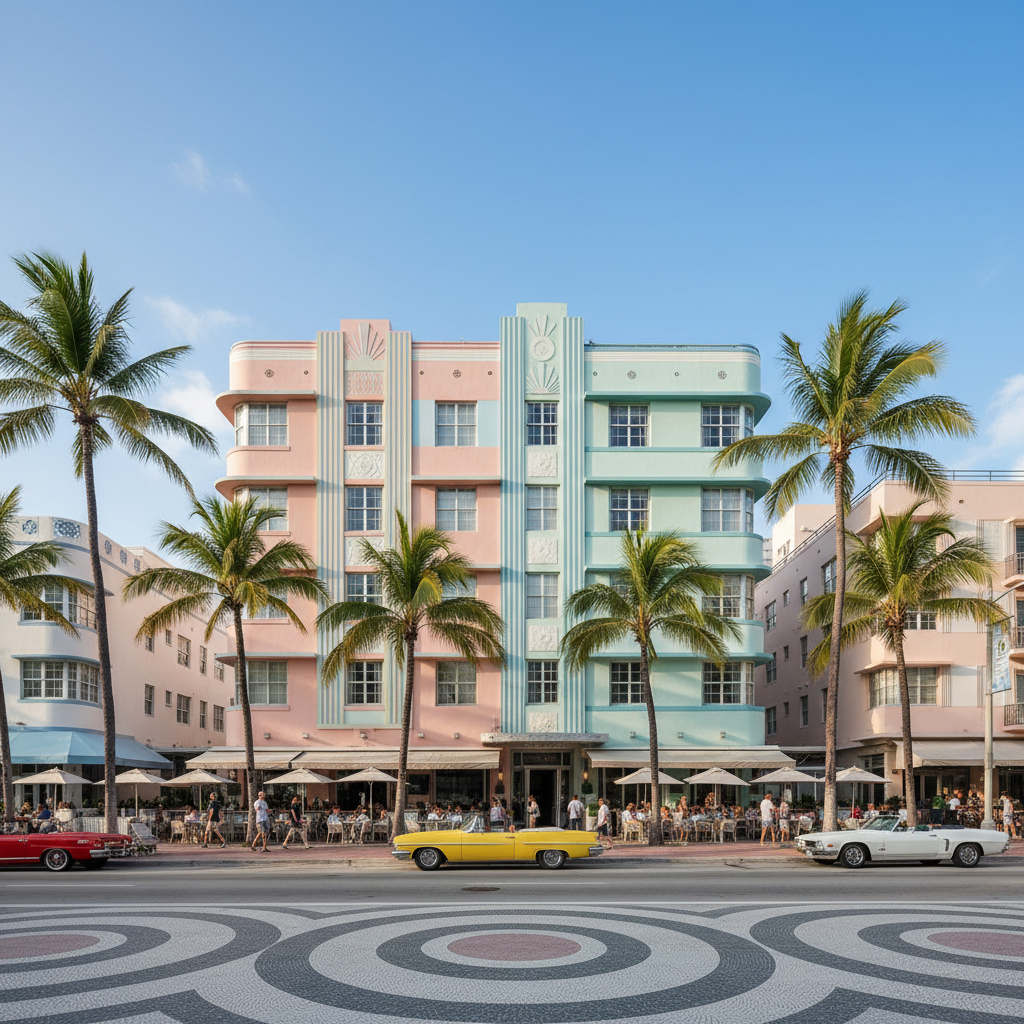
736 Ocean Drive | Built: 1935 | Architect: Henry Hohauser
The Colony Hotel’s bold neon signage and symmetrical facade make it one of Ocean Drive’s most photographed landmarks. Its cinematic history and vibrant presence have made it a symbol of South Beach glamour.
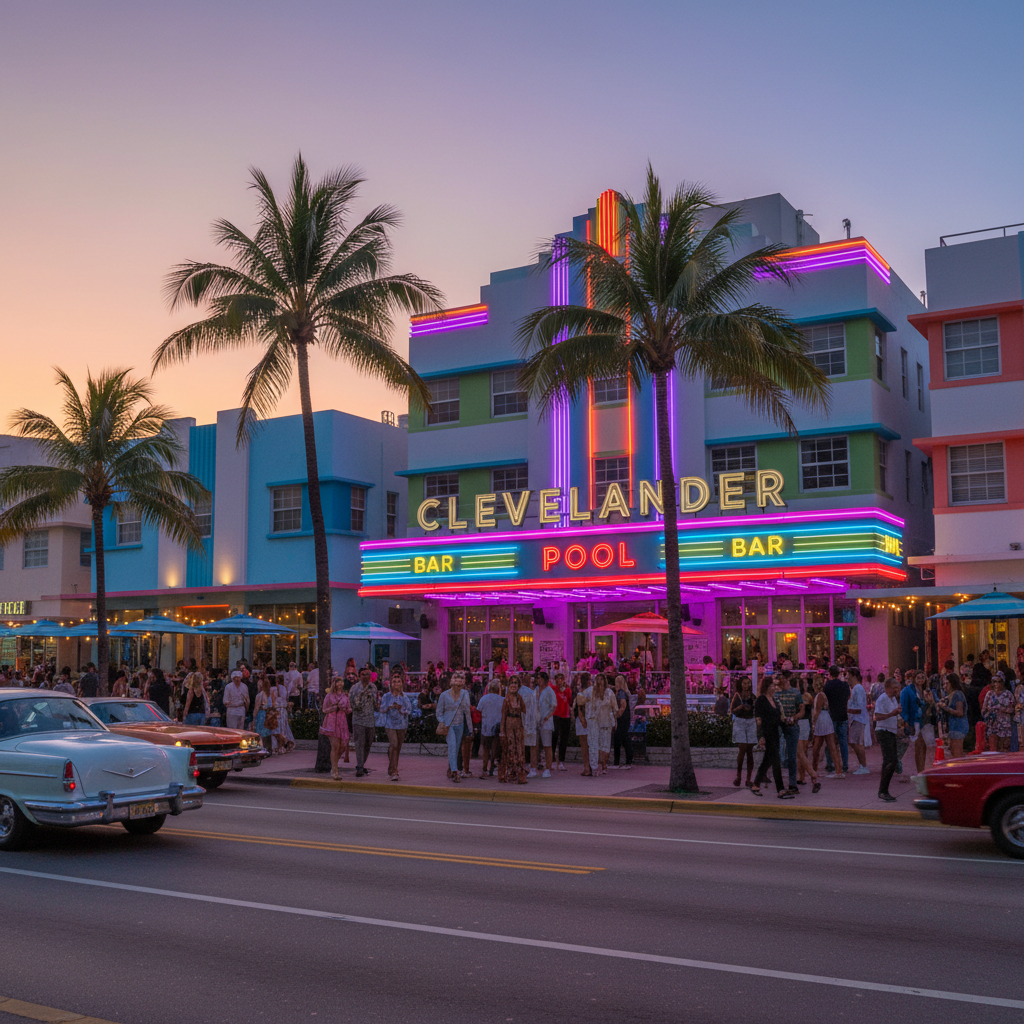
The Clevelander
1020 Ocean Drive | Built: 1938 | Architect: Albert Anis
Known for its lively nightlife and curved facade, the Clevelander merges Art Deco elegance with Miami’s party spirit. The building’s neon glow and geometric accents define the city’s tropical take on Deco.
The Carlyle Hotel
1250 Ocean Drive | Built: 1939
With its curved edges, dramatic sunshades, and pop culture appearances in films like “The Birdcage,” the Carlyle is a textbook example of streamlined Deco architecture.
The Wolfsonian-FIU
1001 Washington Avenue | Built: 1927
Originally a storage facility, this striking building now houses a museum dedicated to design and history. Its industrial bas-reliefs and geometric patterns are quintessential Miami Deco. Learn more at The Wolfsonian-FIU.
The National Hotel
1677 Collins Avenue | Built: 1940 | Architect: Roy France
Famed for its 205-foot infinity pool and oceanfront location, the National Hotel’s sleek lines and vintage interiors make it a beacon of Deco sophistication.
The Delano South Beach
1685 Collins Avenue | Built: 1947 | Architect: Robert Swartburg
Once Miami Beach’s tallest building, the Delano is a minimalist Deco masterpiece, known for its vertical emphasis and celebrity allure.
The Tides
1220 Ocean Drive | Built: 1936 | Architect: L. Murray Dixon
Dubbed the “Queen of Ocean Drive,” the Tides is renowned for its height, nautical porthole windows, and elegant symmetry.
The Raleigh Hotel
1775 Collins Avenue | Built: 1940 | Architect: L. Murray Dixon
A favorite of celebrities, the Raleigh’s cascading pool and maritime-inspired design are hallmarks of Miami’s Deco era.
The Betsy Hotel
1440 Ocean Drive | Built: 1942
Blending Deco with Colonial Revival, the Betsy’s refined portico and cultural programming distinguish it from its neighbors.
Villa Casa Casuarina (Versace Mansion)
1116 Ocean Drive | Built: 1930
A blend of Mediterranean Revival and Art Deco, this mansion is famed for its lavish interiors and association with Gianni Versace.
The Fillmore Miami Beach at the Jackie Gleason Theater
1700 Washington Avenue | Built: 1950
With its tiered neon marquee and streamlined facade, the Fillmore is a hub for live music and entertainment.
The Avalon Hotel
700 Ocean Drive | Built: 1941 | Architect: Albert Anis
The Avalon’s pastel hues, chrome accents, and vintage car tradition capture the nostalgia of 1940s South Beach.
The Leslie Hotel
1244 Ocean Drive | Built: 1937 | Architect: Albert Anis
The Leslie’s sunny yellow facade and playful Deco details embody the carefree charm of Miami’s resort culture.
Park Central Hotel (The Celino)
640 Ocean Drive | Built: 1937 | Architect: Henry Hohauser
Known as the “Blue Jewel,” this hotel’s cobalt neon and sweeping curves are iconic features of Miami’s Golden Age of travel.
The Breakwater Hotel
940 Ocean Drive | Built: 1939 | Architect: Anton Skislewicz
A Nautical Moderne gem, the Breakwater’s bold symmetry and glowing signage make it a favorite for photographers.
The Marlin Hotel
1200 Collins Avenue | Built: 1939 | Architect: L. Murray Dixon
With its pastel facade and “eyebrow” window shades, the Marlin is also famous for its world-class recording studio.
Miami Beach Post Office
1300 Washington Avenue | Built: 1937
A fusion of Deco and classical grandeur, this civic building features a striking starburst ceiling and historic murals.
Lincoln Theatre
551 Lincoln Road | Built: 1935
Originally a movie palace, now a retail space, the Lincoln Theatre’s Deco facade remains a testament to Miami’s architectural evolution.
Beacon South Beach Hotel
720 Ocean Drive | Built: 1936 | Architect: Henry O. Nelson
Famed for its neon accents and chrome detailing, the Beacon’s design echoes the sleek forms of vintage ocean liners.
Congress Hotel
1036 Ocean Drive | Built: 1936 | Architect: Henry Hohauser
A classic example of Hohauser’s work, the Congress features geometric patterns and a prominent location on Ocean Drive.
Hoffman’s Cafeteria
1450 Collins Avenue | Built: 1939 | Architect: Henry Hohauser
Known for its “angel wing” facade and central turret, Hoffman’s is a visually striking Deco treasure.
Art Deco Beach Patrol Headquarters
1001 Ocean Drive | Built: 1934 | Architect: Robert Taylor
A functional masterpiece, this lifeguard headquarters features porthole windows and streamlined railings inspired by cruise ships.
Additional Factual Insights and Statistics
- Miami Beach’s Art Deco District attracts over 10 million visitors annually, making it one of the most visited historic neighborhoods in the United States. Source: City of Miami Beach
- The economic impact of the Art Deco District is significant: local businesses in the area generate an estimated $2 billion in revenue each year, much of it attributed to heritage tourism. Source: Miami Design Preservation League
- The Miami Design Preservation League offers over 1,000 guided walking tours annually, educating more than 50,000 visitors about the city’s architectural heritage. Learn more or book a tour
- Miami’s Art Deco buildings are not just tourist attractions—they are also home to more than 5,000 residents, making it a living community rather than a static museum.
- The district’s preservation success has inspired similar efforts in cities around the world, with Miami’s approach to adaptive reuse and restoration cited in international urban planning conferences.
Art Deco’s Influence on Miami’s Culture and Identity
Art Deco architecture is woven into the fabric of Miami’s identity. These buildings do more than beautify the skyline—they shape the city’s reputation as a destination for creativity, luxury, and innovation. Art Deco’s influence is visible in Miami’s art, fashion, film, and tourism, making the city a magnet for visionaries and trendsetters.
From movies to music videos, Miami’s Art Deco landmarks have become cultural icons, symbolizing the city’s dynamic energy and timeless style. The pastel facades and neon lights are instantly recognizable, setting Miami apart from any other city in the world.
The Ongoing Legacy: Preservation and Restoration
Preserving Miami’s Art Deco heritage has been a community effort, led by organizations like the Miami Design Preservation League. Thanks to their advocacy, many threatened buildings have been restored rather than demolished, ensuring that future generations can experience Miami’s unique architectural legacy.
Restoration projects often blend historical accuracy with modern comforts, allowing these landmarks to remain functional while honoring their original design. Miami Beach’s Art Deco Historic District is recognized as a model for urban preservation, with restoration grants and incentive programs supporting property owners in maintaining the area’s unique character.
Conclusion
Miami’s Art Deco landmarks are more than architectural wonders—they are living symbols of the city’s history, creativity, and resilience. Exploring these buildings offers a window into Miami’s soul, revealing the stories and styles that have shaped its identity for nearly a century. Whether you’re a first-time visitor or a lifelong resident, there’s always something new to discover in Miami’s Art Deco district. Step into the past, celebrate the present, and experience the timeless allure that makes Miami truly unforgettable.

Sofia Martinez is your ultimate insider for Miami, specializing in Neighborhood Guides, Attractions, Beaches, and Nightlife. She's passionate about revealing the city's true essence, from hidden gems to iconic hotspots. Sofia constantly explores Miami's vibrant culture, whether it's through Art Deco walks, beach days, or Latin dance nights. Trust her local insights and authentic recommendations to guide you through an unforgettable, immersive experience, ensuring you discover the magic of Miami like a true local.